
Table of Contents
Introduction
The market for IPTV-providers has grown dramatically in recent years, and with that growth has come a wide spectrum of quality. Some services deliver rock-solid streams, generous channel libraries, and responsive support. Others promise the world and consistently underdeliver — buffering through prime-time viewing, disappearing during major events, or offering minimal help when things go wrong.
Knowing how to evaluate IPTV-providers properly is the difference between a genuinely upgraded TV experience and a frustrating waste of money. Whether you’re a first-time buyer or looking to switch from a service that’s let you down, this guide gives you the framework to make the right choice.
We’ll cover what IPTV-providers offer, what separates the reliable ones from the rest, the main plan types available, and the warning signs that should send you looking elsewhere.
What Do IPTV Providers Actually Offer?
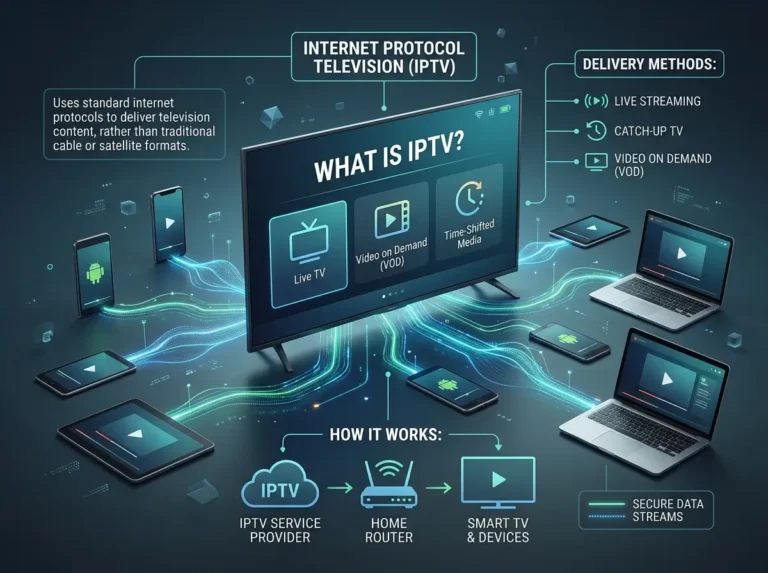
At their core, IPTV-providers deliver television content over a broadband internet connection rather than through traditional broadcast infrastructure. Instead of a satellite dish or cable line, content travels via internet data packets to a compatible app or media player on your device.
Most established IPTV providers offer a combination of the following:
Live channel packages. The backbone of most services — hundreds of live channels spanning entertainment, news, sport, children’s programming, lifestyle, and international content. The depth and reliability of a live channel lineup is one of the clearest indicators of a quality provider.
Electronic Programme Guide (EPG). A built-in TV guide that shows current and upcoming programming across all available channels. The best IPTV providers supply accurate 7-day EPG data, making it easy to discover and plan your viewing.
Video on Demand (VOD). Many IPTV-providers supplement live channels with an on-demand library of films and series. The size and freshness of a VOD catalogue varies significantly between providers.
Catch-up TV. Some IPTV-providers offer a time-shift or catch-up feature, allowing users to rewatch broadcasts from the previous 24–72 hours.
Multi-device access. Reputable IPTV providers support viewing across smart TVs, streaming sticks, Android boxes, smartphones, tablets, and computers — often across multiple screens simultaneously.

What Separates Good IPTV Providers from Bad Ones
Understanding the markers of quality is essential when comparing IPTV providers side by side.
Server infrastructure and uptime. The most important differentiator between IPTV providers is the stability of their streaming servers. High-quality providers invest in redundant infrastructure that maintains performance during peak demand — match days, popular premieres, breaking news events. Cheap providers cut corners here, leading to buffering and outages at the worst possible moments.
Stream quality consistency. Strong IPTV providers deliver consistent HD and 4K streams without degradation over the course of an evening. Variable bitrate drops — where a stream starts in HD but degrades mid-viewing — are a sign of underpowered server capacity.
EPG reliability. Inaccurate or missing programme guide data is a common shortcoming among lower-tier IPTV providers. A trustworthy service keeps its EPG synchronised and up to date.
Transparent pricing. Legitimate IPTV-providers clearly display their pricing, plan tiers, and what each package includes. Vague pricing structures or pressure to pay via untraceable methods are warning signs.
Responsive customer support. When issues arise — and with any streaming service, they occasionally will — the quality of support makes a huge difference. The best IPTV-providers offer accessible help via live chat or a structured ticketing system with reasonable response times.
Legal compliance. Trustworthy IPTV-providers operate within applicable content licensing frameworks. Always verify that any service you consider holds the rights to the content it distributes, and use only authorised sources.
Types of IPTV Providers and Their Plans
IPTV providers structure their offerings in a few common ways. Understanding these formats helps you match a service to your needs.
Residential streaming services. Consumer-focused IPTV-providers targeting households with broad channel packages, family-friendly VOD, and intuitive apps. These are the most widely used and typically offer the most polished user experience.
Sports-focused providers. Some IPTV-providers specialise in sports coverage, offering deeper access to live sporting events and dedicated sports channels. Worth considering if live sport is your primary motivation.
International content providers. Certain IPTV-providers cater specifically to audiences seeking programming from particular regions or in specific languages — popular among expat communities and multilingual households.
Trial-first providers. Many of the most confident IPTV-providers offer short-term trial plans — typically 24 to 48 hours — allowing users to assess performance before committing to a monthly or annual subscription.
Content availability may vary by region across all provider types. Always confirm what’s included in your territory before subscribing.
How to Evaluate IPTV Providers Before Subscribing
Rushing into a long-term commitment without proper evaluation is the most common mistake buyers make. Here’s a structured approach to comparing IPTV providers.
Step 1 — Define your priorities. Are live sports your main draw? International channels? A broad entertainment mix? Clarifying what you actually watch narrows the field significantly and helps you focus your evaluation on what matters.
Step 2 — Check device compatibility. Not all IPTV providers support every device equally. Confirm that your preferred hardware — whether that’s a smart TV, Fire Stick, Android box, or mobile — is fully supported before purchasing.
Step 3 — Run a trial. Any serious shortlist of IPTV-providers should start with a trial. Test stream quality at peak hours (evenings and weekends), check that your key channels are included and stable, and assess how accurately the EPG is populated.
Step 4 — Test customer support. Before subscribing, send a pre-sale query to the support team. Response speed and quality tell you a great deal about how a provider handles issues after you’ve paid.
Step 5 — Review the payment terms. Understand exactly what you’re committing to. Monthly rolling plans from reputable IPTV-providers carry lower risk — you can leave if the service doesn’t deliver. Annual plans offer better value but require higher confidence in the provider upfront.

Red Flags to Watch Out For When Comparing IPTV Providers
The IPTV market includes unreliable operators alongside legitimate ones. These warning signs should prompt you to walk away.
No trial option. Trustworthy IPTV providers are confident enough in their service to offer a trial. A provider that refuses any test period may have something to hide about stream quality or reliability.
Unverifiable payment methods. Legitimate IPTV providers accept secure, recognisable payment options and issue receipts. Requests for payment via unusual or untraceable methods are a significant red flag.
Vague or missing channel lists. Reputable IPTV providers publish or readily share their channel lineup. If a provider is evasive about what’s actually included, that’s a concern.
No customer support contact. Any credible service makes it easy to reach the support team. IPTV providers with no visible support channel — no chat, no email, no ticketing — offer no recourse if things go wrong.
Unrealistic pricing claims. Offers that seem dramatically cheaper than the market norm often reflect compromised infrastructure, unlicensed content, or a short-lived operation. Value is important, but implausibly low pricing is usually a warning sign.
IPTV Providers — Frequently Asked Questions
What are IPTV providers? IPTV providers are companies or services that deliver television content — live channels, on-demand video, and catch-up programming — over a broadband internet connection to compatible devices.
How do I choose between IPTV providers? Compare based on channel stability, stream quality, EPG accuracy, device compatibility, customer support, and pricing transparency. Always use a trial before committing to a longer plan.
Are all IPTV providers legal? No. Some IPTV providers operate without proper content licences. Users should only subscribe to services that hold the appropriate rights for the content they distribute and comply with local regulations.
What devices are compatible with IPTV providers? Most established IPTV-providers support smart TVs, Amazon Fire Stick, Android TV boxes, Apple TV, iOS and Android smartphones, tablets, and computers.
Do IPTV providers offer sports channels? Many do, though the specific sports channels available vary by provider and subscription tier. Confirm sports coverage before subscribing if this is a priority.
Can I use IPTV providers outside my home country? Some IPTV-providers support international access, but content availability often varies by region due to licensing restrictions. Check with the provider directly before travelling.
Conclusion: Take Your Time and Choose the Right Provider
The difference between a great IPTV experience and a poor one almost always comes down to provider quality. With so many IPTV providers competing for your business, there’s no need to rush or compromise — take the time to trial services, compare channel lists, and verify support quality before committing.
Prioritise stability, transparency, and compliance over rock-bottom pricing. The right choice among today’s IPTV-providers will deliver a flexible, high-quality viewing experience that puts traditional pay-TV firmly in the past.
Start your search with a shortlist of well-reviewed options, request trial access, and let the service prove itself before you spend a penny more.